
So where’s the poor man’s bread?
Fresh French bread rested in my hands as I watched a mother and her two hungry children huddle around a muddy-looking pitcher of water, gripped tightly in their fragile fingers. The youngest lifted a small, old, rusty metal cup to her innocent lips. Parallel to her long, weary face came the spontaneous roars of empty stomachs, echoing between her and her sister. The rumbling grew into a haunting chorus, a fading song of hunger carried in weak notes of despair:
“Momma, my tummy hurts.”
Food Deserts Have Their Ugly Grip In Low-Income Communities.
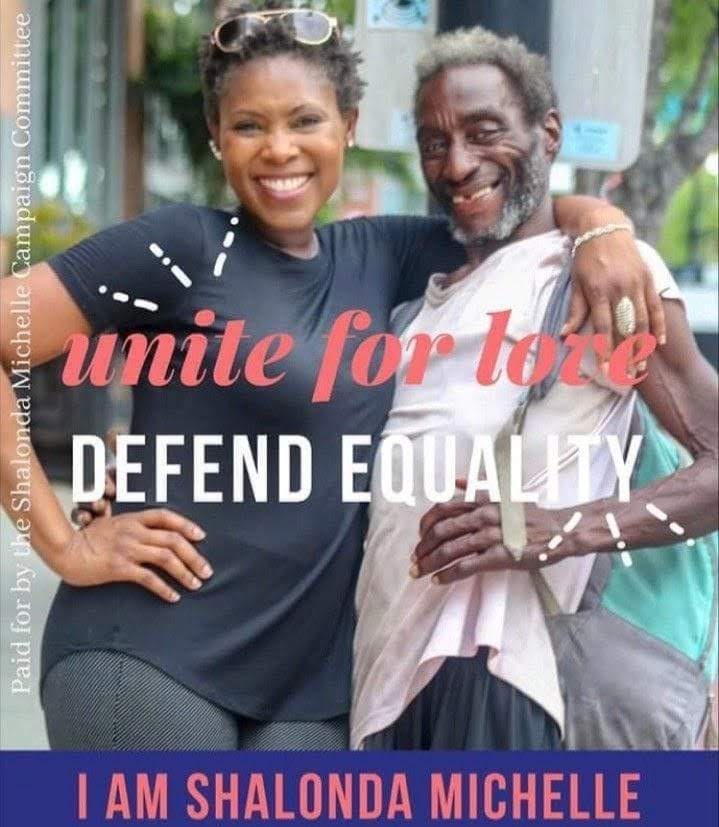
Princess Shalonda Michelle
I lived with my fiery momma, Corene, who stood 5 ½ feet tall—naturally comedic, especially when she stressed that half a foot! My bossy oldest sister, Tesha, and my charismatic baby sister, Mee Mee—known as my twin—were always by my side. I was a caramel-toned, long, skinny, sandy-headed, energetic girl known for my smile and strength.
On hot summer days, my sisters and I would spray each other with water hoses, play hopscotch, and run tag until the streetlights flickered on—or until we heard Mom or Grandma call us in to wash up for dinner.
In the ’80s, Momma found an apartment in the Highland Court Government Projects. We moved away from Grandma, and a few months later, Momma met Mr. Earnest T. Bass. We loved him so much! He fished, hunted, and protected us. Before Mr. Earnest came into our lives with a car, we walked down Highland Court’s long, curvy hills to the Safeway grocery store. Hot rays beamed on our skin as we journeyed a little over half a mile to shop. I walked with my shoulders pulled back, chest pushed out, and a huge Kool-Aid smile, already imagining everything we’d buy.
Regardless of my tiny size, I felt so strong. I carried as many bags as my thin arms could hold—and then some. Everyone thought my big white smile, paired with arms full of groceries, was cute. They had no clue. All I thought about was the dinner we’d have later that day. I’d slowly lick my thick brown lips, daydreaming of fresh greens, sweet potatoes (candied yams), fried chicken, cornbread, peach cobbler, and Mom’s sweet tea.
Another beautiful thing about those trips was the people. We knew everyone—the clerks at the grocery store, the man on the corner, the woman at the pharmacy, and even the same drunks who lingered outside the caged-in liquor store with alcohol and cigarette posters plastered on its walls. We were proudly known as “Ms. Corene’s kids.”
When Mr. Earnest showed up with his cool blue 1980 Oldsmobile, we no longer had to walk the long slanted hills to Safeway. As crazy as it sounds, those simple walks and connections made us feel like part of a true community.
Now, 30+ years later, there are no grocery stores within several miles of my old neighborhood. This condition is called a food desert. Many argue that damage control is too costly or that robberies make it unsafe for grocery stores to exist in these areas. But the truth is, crime was worse in the ’80s and ’90s than it is today! It’s nauseating to hear so many justify why low-income communities “can’t afford” a grocery store.
As far back as my great-aunt’s time, there was a grocery store in our community. With today’s technology, there’s no excuse not to provide effective theft protection—or to create programs where the community helps sustain gardens and resources to combat hunger. According to No Kid Hungry, twelve million children in the United States live in “food insecure” homes. That means households lack enough food for every family member to lead a healthy life.
Hunger was all too familiar to me as a child. Now, as a mom, I’m fighting to break that cycle. Food deserts are a huge problem—especially since 23.5 million people live in them.
So, where is the source of the poor man’s bread? Why are we allowing this? Let’s not sit and enjoy our bread while watching children drink from the rusty cup of social injustice toward the poor.
“Be the change that you wish to see in the world.” ― Mahatma Gandhi
“If we all share our bread, the world will be hungry no more.” –Princess Shalonda Michelle
Follow My Blog
Get new content delivered directly to your inbox.
 Princess Shalonda Michelle Communication Firm